

George Akiyama
The Hand in the Fog (霧の手) | Face #40 | George Akiyama | Essay
The Hand in the Fog (霧の手) | Face #40 | George Akiyama | Essay
Couldn't load pickup availability
Before becoming famous as George Akiyama, the future creator of Zeni Geba, Ashura, Patman X, and Haguregumo spent his formative years in the shadowy world of kashihon, Japan's postwar rental manga industry.
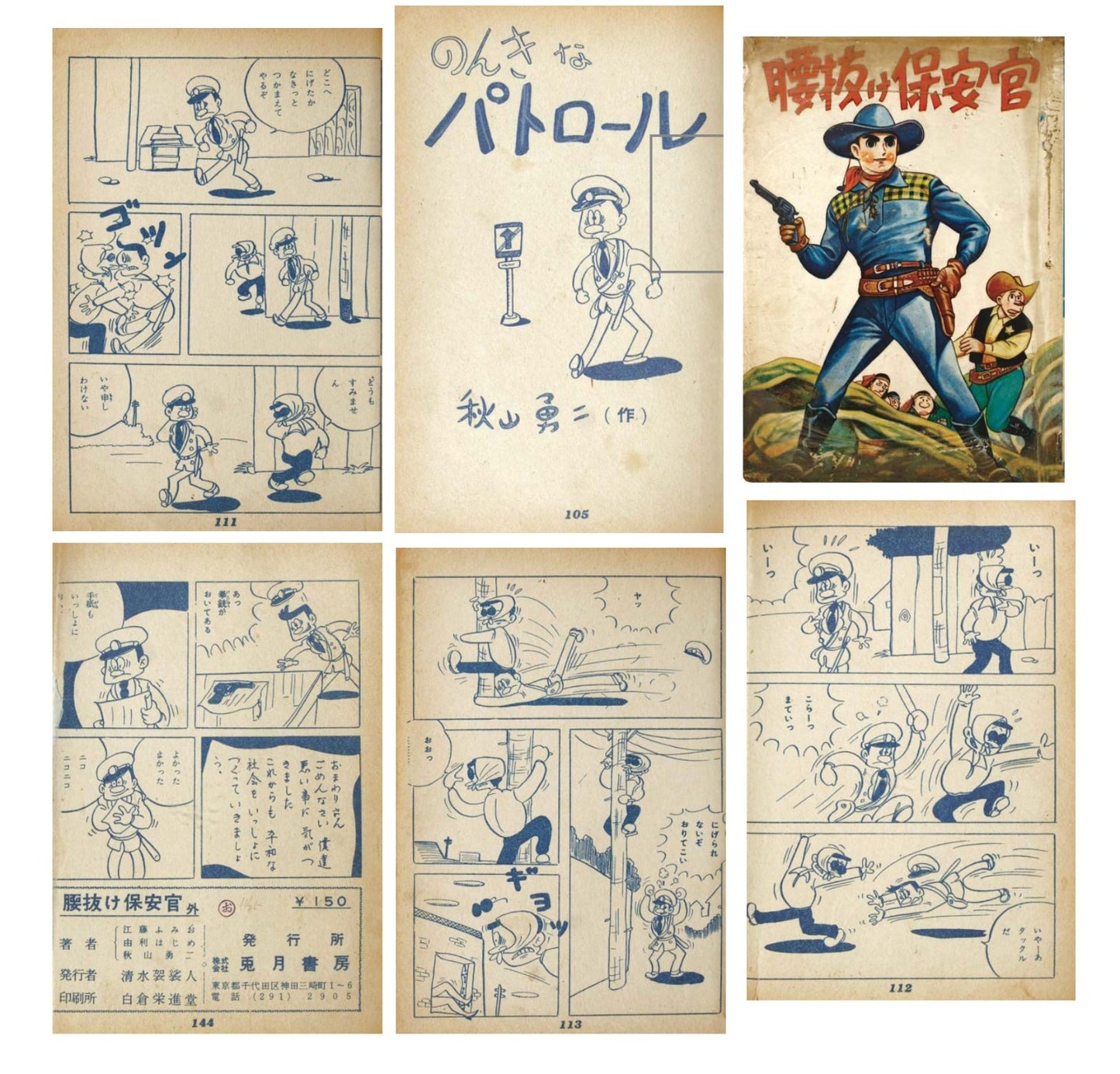
Long before adopting the flamboyant pen name "George Akiyama," the young artist worked under his real name, Akiyama Yūji (秋山勇二), contributing action, crime, and adventure stories to the rapidly evolving rental manga market. One of his earliest known works, Arashi to Ninja (Storm and Ninja), appeared in 1960 when he was only sixteen years old.
By May 1961, Akiyama was publishing works such as Renkan Blues through Togetsu Shobō, followed by Gekiryū (Torrent) in the anthology Chōsen in June 1962. These publications reveal a young artist already immersed in the emerging gekiga movement years before his mainstream breakthrough.
During this period Akiyama moved to Tokyo and worked at Yoshimeidō, a rental manga distributor in Kanda. He delivered manuscripts to publishers and editors throughout the kashihon network while studying under established manga artists Yoshimitsu Maetani and Kenji Morita. According to journalist Takashi Tachibana in The Disappearance of Manga Artist George Akiyama (Bungei Shunjū, 1971), the aspiring artist visited Maetani's home almost daily while struggling to establish himself in the industry. His first collected volume was even published under Maetani's name, reflecting the apprentice-like nature of manga production during the rental manga era.
Among the most intriguing publications connected to this obscure period is Face (顔), a long-running detective and suspense anthology published by Angel Bunko. At least forty-one issues are known today. Surviving copies reveal contributions by major figures of early gekiga including Takao Saitō, Masahiko Matsumoto, Masaaki Satō, Susumu Yamamori, Kenji Nanba, Fumiyasu Ishikawa, Kiyoshi Koike, Takeshi Jō, and others. Yet despite its importance, much of the series remains undocumented and many issues appear to have vanished entirely.
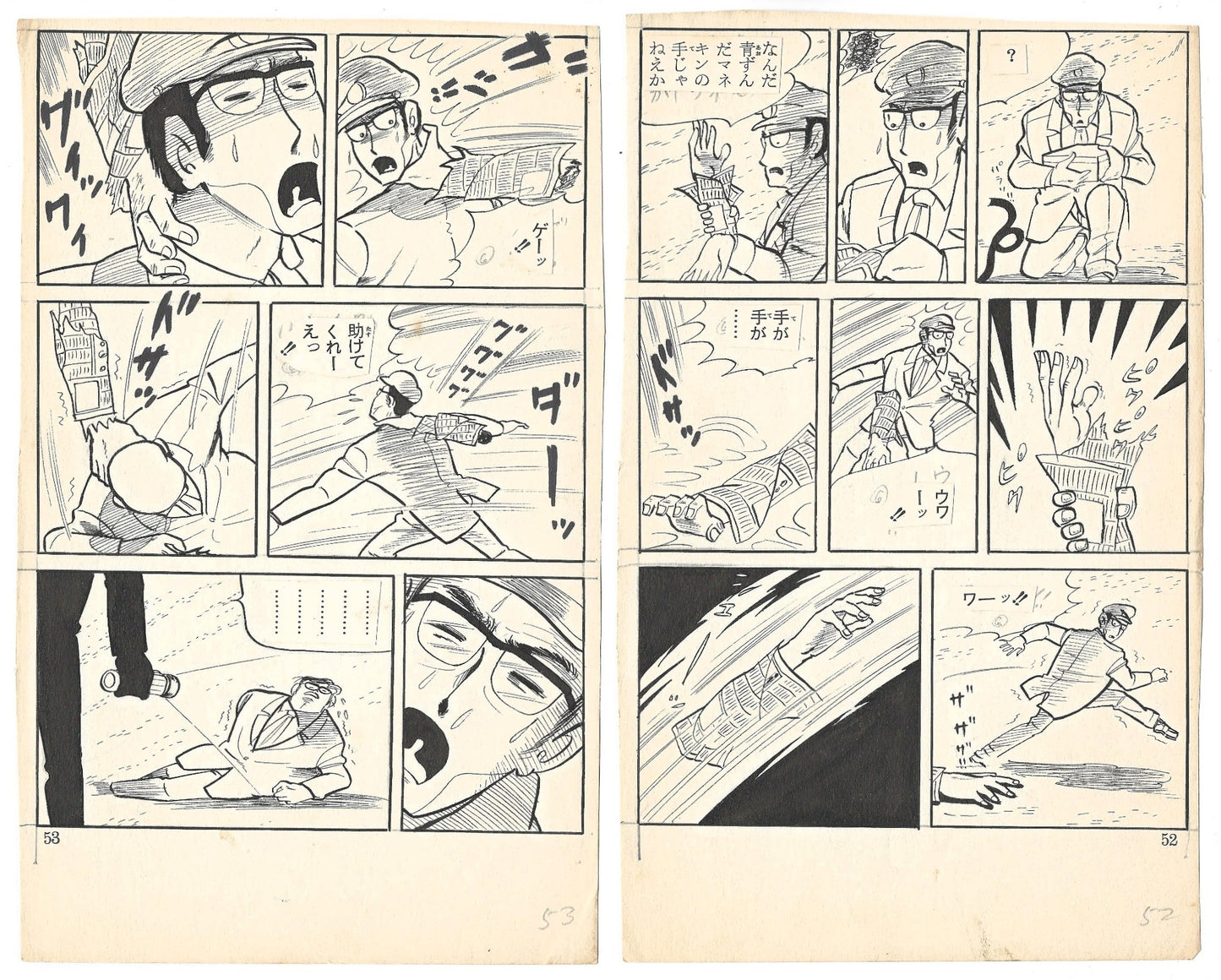
The story presented here, The Hand in the Fog (霧の手), was published in Face #40 and credited to 正田まもる (Shōda Mamoru). For decades, the identity behind this alias remained unclear. However, recent research by a veteran Japanese kashihon researcher and publisher identified Shōda Mamoru as none other than George Akiyama.
This identification is supported by the publication date, the artistic similarities to Akiyama's earliest documented works, the widespread use of multiple pen names within the rental manga industry, and Akiyama's documented activity in the same publishing circles at exactly the same time. Combined with the provenance of these original pages, the evidence makes it clear that The Hand in the Fog belongs to the formative years of George Akiyama's career.
What makes these pages particularly fascinating is not how closely they resemble Akiyama's later masterpieces, but how clearly they reveal the beginnings of his interests as a storyteller. Beneath the mystery plot lies a tale of greed, guilt, fear, and self-destruction. As the protagonist's pursuit of treasure turns into obsession, the story gradually shifts from adventure into psychological suspense.
Unlike many straightforward action stories of the period, The Hand in the Fog is less concerned with heroism than with human weakness. The emphasis on moral ambiguity, psychological pressure, and the consequences of individual choices offers an intriguing glimpse of the artist George Akiyama would eventually become. Those same concerns would later reappear, in very different forms, throughout works such as Zeni Geba, Ashura, Patman X, and Haguregumo.
Note : Rental manga was produced cheaply, circulated heavily, and often discarded once worn out. Entire publishers disappeared during the collapse of the kashihon market, leaving behind fragmentary archives and countless lost works. Because of this, surviving pages such as these offer a rare glimpse into the hidden apprenticeship years of one of postwar Japan's most provocative and influential manga artists: Yūji Akiyama, better known to the world as George Akiyama.
Synopsis of The Hand in the Fog
The narrator is a taxi driver living in postwar Japan. One foggy night, while driving through heavy mist, he notices a strange box lying on the roadside. Thinking it may contain something valuable, he stops and picks it up.
As soon as he opens it, he discovers a mysterious severed hand inside.
Almost immediately, bizarre things begin to happen.
The hand suddenly comes to life and grabs him. Terrified, he throws it away, but the hand keeps reappearing. A policeman eventually finds him in a state of panic, yet when the taxi driver tries to explain what happened, nobody believes him.
Days later, he convinces himself it was all a dream. Then the hand returns.
That night he is transported into a strange vision or dreamlike experience. He finds himself on a remote island where he encounters a rugged castaway-like man. The stranger tells him a story from the wartime years.
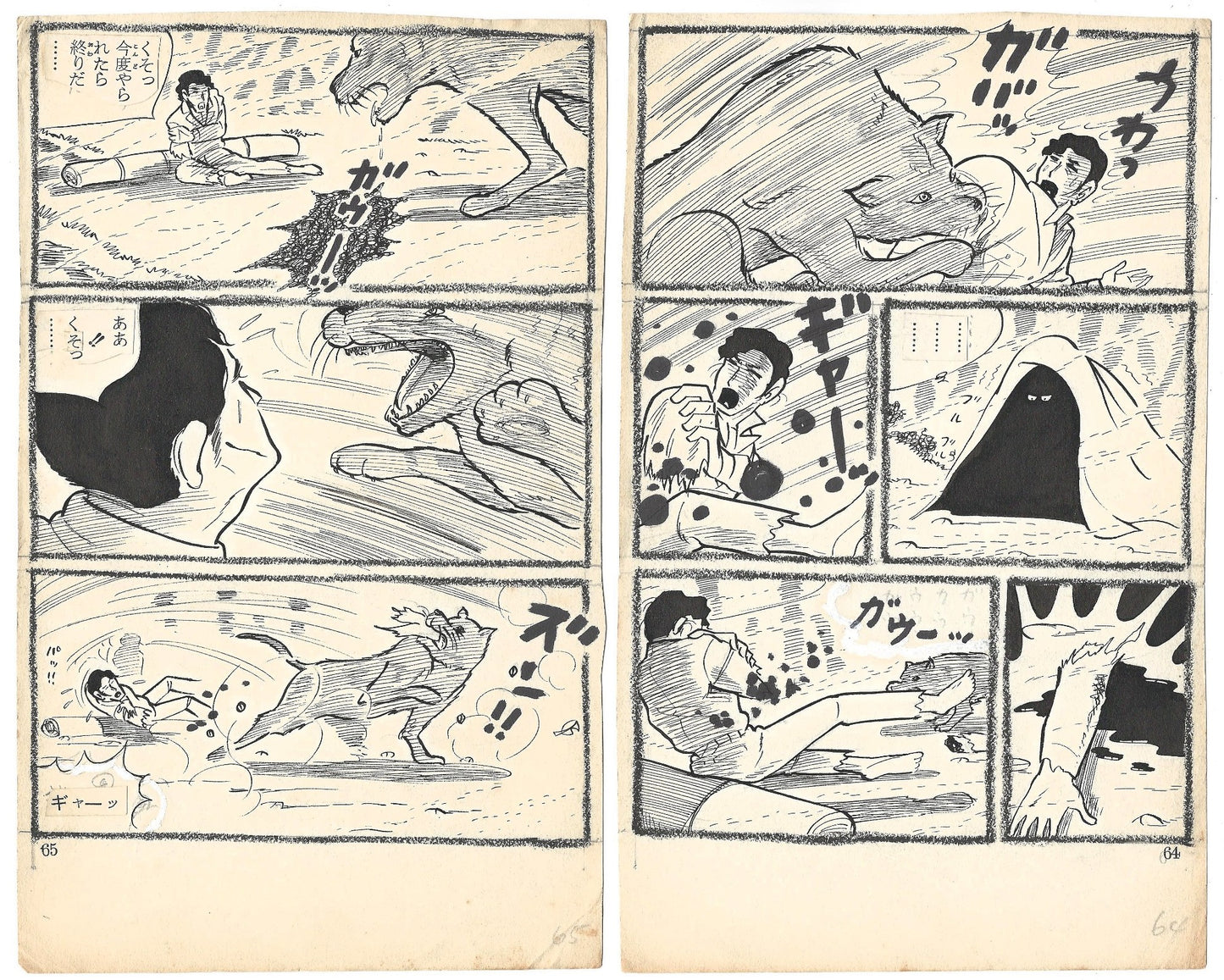
According to the castaway, a wealthy man named Ōsawa had become stranded on the island with him. At first they cooperated, but over time the situation deteriorated. Food became scarce and survival became increasingly difficult. The castaway eventually discovers that Ōsawa possesses a precious jewel. Consumed by greed, he decides to murder him and steal it.
As he prepares to carry out the crime, strange supernatural events begin occurring. A black shadow-like figure appears. A savage wild dog attacks. The island itself seems haunted or cursed. During the struggle, the jewel, the hand, and the shadow become linked in a series of uncanny events. The severed hand appears to act almost independently, pursuing justice or vengeance.
The castaway ultimately dies, while the mystery of the hand remains unresolved.
In the final pages, the taxi driver awakens and discovers that the whole episode was connected to a real event. A radio broadcast announces that a volcanic eruption has caused a remote island in the South Pacific to sink beneath the sea. The island mentioned in the story has vanished forever.
The implication is that the hand, the jewel, and the castaway's story were all connected to a real tragedy whose last supernatural trace reached the taxi driver through the fog.
Share