

Tatsuro Harada
That Girl Is a Wolf Girl | pg.4 | Tatsurō Harada (原田たつろう) | Monthly Shōnen Jump | Akira Toriyama
That Girl Is a Wolf Girl | pg.4 | Tatsurō Harada (原田たつろう) | Monthly Shōnen Jump | Akira Toriyama
Couldn't load pickup availability
Tatsurō Harada (原田たつろう) (1955-?) | That Girl Is a Wolf Girl, 1980–1982
Size: 25.5 x 36 cm
Media: pencil & ink on paper
Good to Very good condition
Tatsurō Harada (1955-?) is a Japanese mangaka who established his career in the late 1970s, contributing manga to Shueisha's Weekly Shōnen Jump and Monthly Shōnen Jump. Active throughout the 1980s, he developed a distinctive style of energetic, exaggerated comedy.
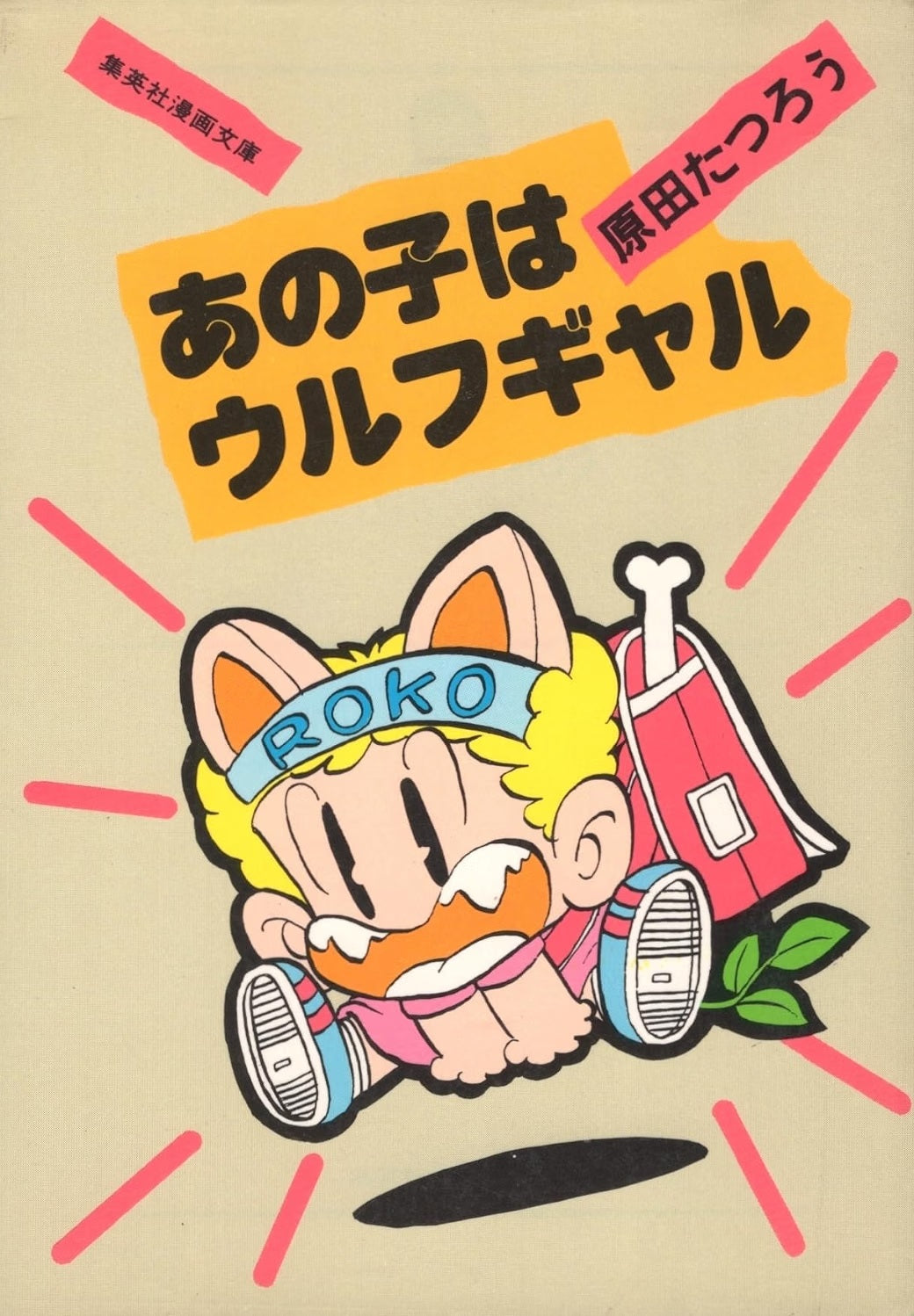
That Girl Is a Wolf Girl appeared in Monthly Shōnen Jump from August 1980 to March 1982 and was later collected into a tankōbon (1984).
The series follows Roko, a wild and eccentric young girl who was raised in the Canadian Rocky Mountains by Lobo, a wolf, Having grown up among wolves rather than humans, Roko considers herself a wolf girl, and her outrageous behaviour reflects her unusual upbringing. Although she possesses no actual supernatural powers, she enthusiastically imitates her wolf family, even creating her own makeshift tail by sticking a tree branch down the back of her trousers! Her return to human society provides the setting for a series of absurd adventures and frantic slapstick comedy.
Harada's lively artwork bears a striking resemblance to the early style of Akira Toriyama, particularly his celebrated comedy manga Dr. Slump (1980–1984). Both artists were contemporaries within Shueisha's Jump publishing family, although Harada had already appeared in Weekly Shōnen Jump in 1978, several months before Toriyama made his debut.
Their work shares exaggerated facial expressions, rounded cartoon characters, imaginative mechanical designs and a strong sense of visual comedy.
Toriyama's arrival introduced a remarkably fresh visual approach to shōnen manga, with designs influenced by Western cartoons and pop art. His characters combined an irresistible cuteness with outrageous, sometimes downright vulgar humour. His fascination with detailed, cartoonish vehicles and imaginary machinery added another distinctive element.
The enormous success of Dr. Slump helped popularise this aesthetic throughout the manga industry, particularly within Shueisha's Jump magazines.
Harada's That Girl Is a Wolf Girl is a wonderful example of this visual trend, combining cute, almost toy-like characters with completely chaotic behaviour.
The influence of Toriyama's visual language is particularly apparent in Harada's designs.
His vehicles, filled with intricate mechanical details yet drawn with a playful sense of exaggeration, bear an extraordinary resemblance to those found in Dr. Slump. Even Roko's pointed wolf-eared headwear closely recalls the animal-eared caps worn by Toriyama's characters, such as Peasuke Soramame and Arale.
The similarities go well beyond character design and are difficult to overlook.
Whether Harada consciously adopted elements of Toriyama's increasingly influential style or arrived at a similar approach independently is not for us to say. Nevertheless, their shared editorial environment and remarkably similar artistic language make Harada's work a fascinating contemporary counterpart to Toriyama's early manga.
Share