

Miyako Oji
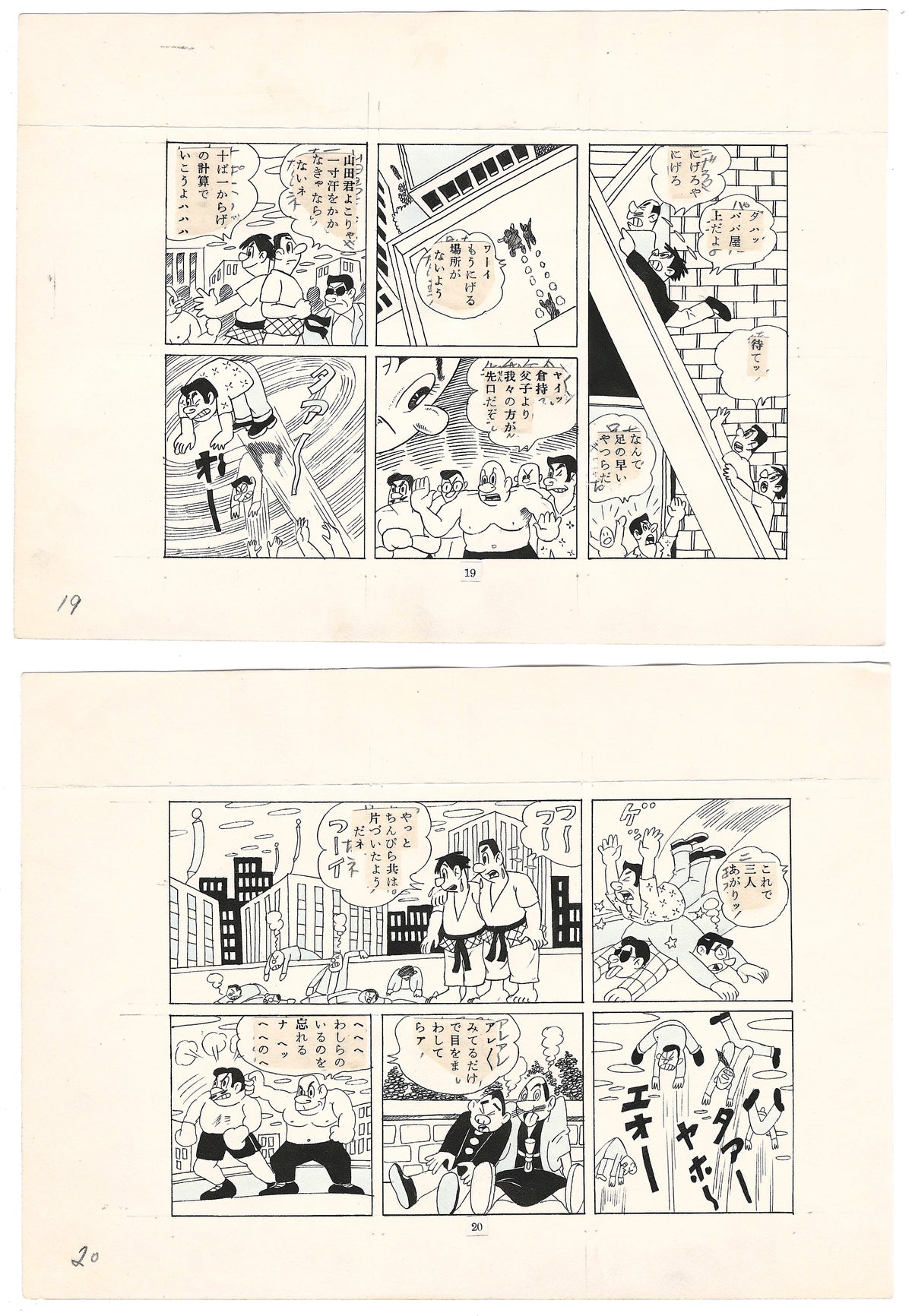
Skyscraper Daring Feet | Miyako Oji | pgs. 19&20 | Akahon Manga Art | c. 1953–1954
Skyscraper Daring Feet | Miyako Oji | pgs. 19&20 | Akahon Manga Art | c. 1953–1954
Couldn't load pickup availability
Skyscraper Daring Feat (摩天楼の離れ技) – c. 1953–1954
2 consecutive original pages from Skyscraper Daring Feat (Matenrō no Hanarewaza), a judo akahon by Miyako Ōji (都おおじ), published by Enomoto Hōreikan in the early 1950s.
Size: 25.2 × 18.2 cm (each)
Media: Pencil, ink and blue watercolour on paper
Very Good Condition
Matenrō no Hanarewaza belongs to a period when judo was becoming an increasingly popular subject in Japanese children's manga, particularly following the success of Eiichi Fukui's Igaguri-kun (1952–1954), one of the genre's earliest major successes.
Miyako Ōji was active across several genres in Enomoto's inexpensive akahon publications, from crime and Western adventures to humorous sports manga. His energetic drawing style, exaggerated facial expressions and playful approach to physical action are particularly well suited to judo, where spectacular throws and dramatic movements provide plenty of opportunities for visual comedy.
The growing number of publications attributed to Ōji suggests that he was a considerably more active mangaka than his relative obscurity today might suggest. Besides Skyscraper Daring Feat, his known works include King of the Underworld, The Deadly Iron Fist, Boss from Hell and even Godzilla!
The diversity of these titles, ranging from science fiction and horror to martial arts, crime and gangster adventures, demonstrates his versatility and suggests that he was a regular contributor to Enomoto's output rather than an occasional illustrator.
Skyscraper Daring Feat is an excellent example of the economical approach to manga production during the akahon era. Enomoto's publications were quickly produced and rarely concerned with elaborate artwork or sophisticated printing. Drawings could be rough, backgrounds minimal and colouring limited to a few simple washes.
Yet despite their modest execution, these pages deliver surprisingly compelling manga. Miyako Ōji understood how to tell an entertaining story through expressive characters, exaggerated movement and straightforward visual storytelling. What the artwork occasionally lacked in refinement, it made up for in energy and humour, exactly what young shōnen readers of the early 1950s were looking for.
Share