

Shinji Nagashima
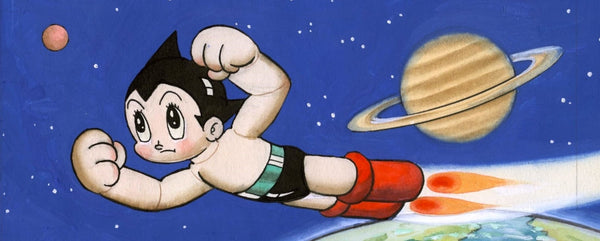
Judo Icchokusen | Shinji Nagashima | Cover #1 | Weekly Shonen King (1967)
Judo Icchokusen | Shinji Nagashima | Cover #1 | Weekly Shonen King (1967)
Couldn't load pickup availability
Size: 26,5 x 38 cm
Media : pencil, ink & aquarel
Very good condition
Shinji Nagashima (1937–2005) was a groundbreaking, pioneering mangaka known for his unique storytelling and significant influence on both seinen and gekiga manga.
Nagashima’s early life was marked by hardship. He lost his father during the war, and his house was destroyed in an air raid. As a child, he dreamed of becoming a manga artist, but his teachers discouraged him.
Feeling frustrated and misunderstood, he became a real delinquent and rose as the leader of his junior high school gang. Leaving school at the age of 14, he ran away from home and tried over ten different jobs, including working at a liquor store, a laundry, and as a tofu seller. None of these jobs lasted long. During this difficult time, he continued to draw manga, sometimes living in extreme poverty, surviving on the leftovers food from his family.
In 1952, Nagashima made his official debut as a mangaka with Piri-chan the Sunflower, earning 6,000 yen for his manuscript (more than the starting salary for a junior high school graduate at the time). Tragically, just weeks before the manga was published, his beloved sister died in an accident.
In the following years, Nagashima became deeply involved in the emerging manga community. He befriended prominent artists such as Yoshiharu Tsuge, Masaharu Endo, Yoshihiro Tatsumi, and Takao Saito. He joined several artist groups, including Kako-kai, which he formed with Fujio Akatsuka, Shotaro Ishinomori, and Mitsuaki Suzuki. He also worked as an assistant to Osamu Tezuka for a time and co-founded Musashino Productions.
In the early 1960s, Nagashima lived a wandering, almost vagabond life in Shinjuku, during which he published The Cruel Story of a Manga Artist, a work that exposed the harsh realities of the manga industry. In 1962, he joined Saito Productions and shifted toward a gekiga style, reflecting a more serious and dramatic approach to manga. He later worked at Mushi Productions, contributing to the direction of the TV anime Jungle Emperor Leo.
From the late 1960s, Nagashima gained recognition as a leading figure in adult-oriented manga. His works, such as Futen, Judo Icchokusen, and Hanaichi Monme (花いちもんめ, often drew from his own experiences and were serialized in magazines like COM and Garo. He won the Shogakukan Manga Award in 1972 and the Japan Cartoonists Association Award for Excellence in 1974. Several of his works were adapted into TV dramas and anime, further cementing his influence.
Nagashima’s later works, including Boyhoods and Happy Days, allowed him greater creative freedom. Shinji Nagashima semi-retired from manga in 1986 but remained active in art until his death. In 1996, despite suffering from diabetes, he completed a full-color manga adaptation of Kenji Miyazawa’s Night on the Galactic Railroad.
He passed away from chronic heart failure on June 10, 2005, at the age of 69. He is buried at Zuisen-ji Temple in Kamakura, and his posthumous Buddhist name was Eikan-in Shin Takamikyu Koji (永閑院愼高美久居士).
Nagashima is remembered as a pioneer who brought personal experience, grit, and humanity to manga, helping to shape the seinen genre and influence generations of artists.
Share


