

Sōji Yamakawa
Biography | Sōji Yamakawa (1908–1992)
Biography | Sōji Yamakawa (1908–1992)
Couldn't load pickup availability
Sōji Yamakawa was a central figure in early postwar Japanese adventure media and a crucial bridge between prewar illustration, kamishibai storytelling, and the rapidly expanding manga industry of the 1940s and 1950s.
He began his career in 1931 as a kamishibai (paper theater) artist, a medium that profoundly shaped his style. His later work retained the staged dramatic tension, bold compositions, and suspense-driven pacing of kamishibai.
In 1932, he launched Shōnen Tiger, an explosive hit that surpassed even the dominant Golden Bat. Notably, Shōnen Tiger featured a villain called Black Satan, whose winged, masked appearance predated Batman’s 1939 debut by seven years.
In 1939, Yamakawa won first prize in the Japan Kamishibai Competition. This brought him to the attention of Kenzo Sudo, editor of Shōnen Club, who invited him to create illustrated stories. During the war years, Yamakawa produced numerous works under strict publishing restrictions, often focusing on biographies or war narratives.
In the immediate postwar years, Yamakawa emerged as a leader in serialized adventure. His breakthrough, Shōnen Ōja (1947), a jungle epic, was so popular that it helped launch Shueisha’s postwar manga business and the magazine Omoshiro Book.
Alongside artists like Shigeru Komatsuzaki and Tetsuji Fukushima, Yamakawa spearheaded the "illustrated story" (e-monogatari) boom of the early 1950s.
His most cultural sensation, Shōnen Kenya (1951), serialized in the Sankei Shimbun, became a massive franchise adapted into radio, TV, and film.
Other works, like Knockout Q (1949), influenced a new generation of creators, including Ikki Kajiwara (author of Tomorrow’s Joe).
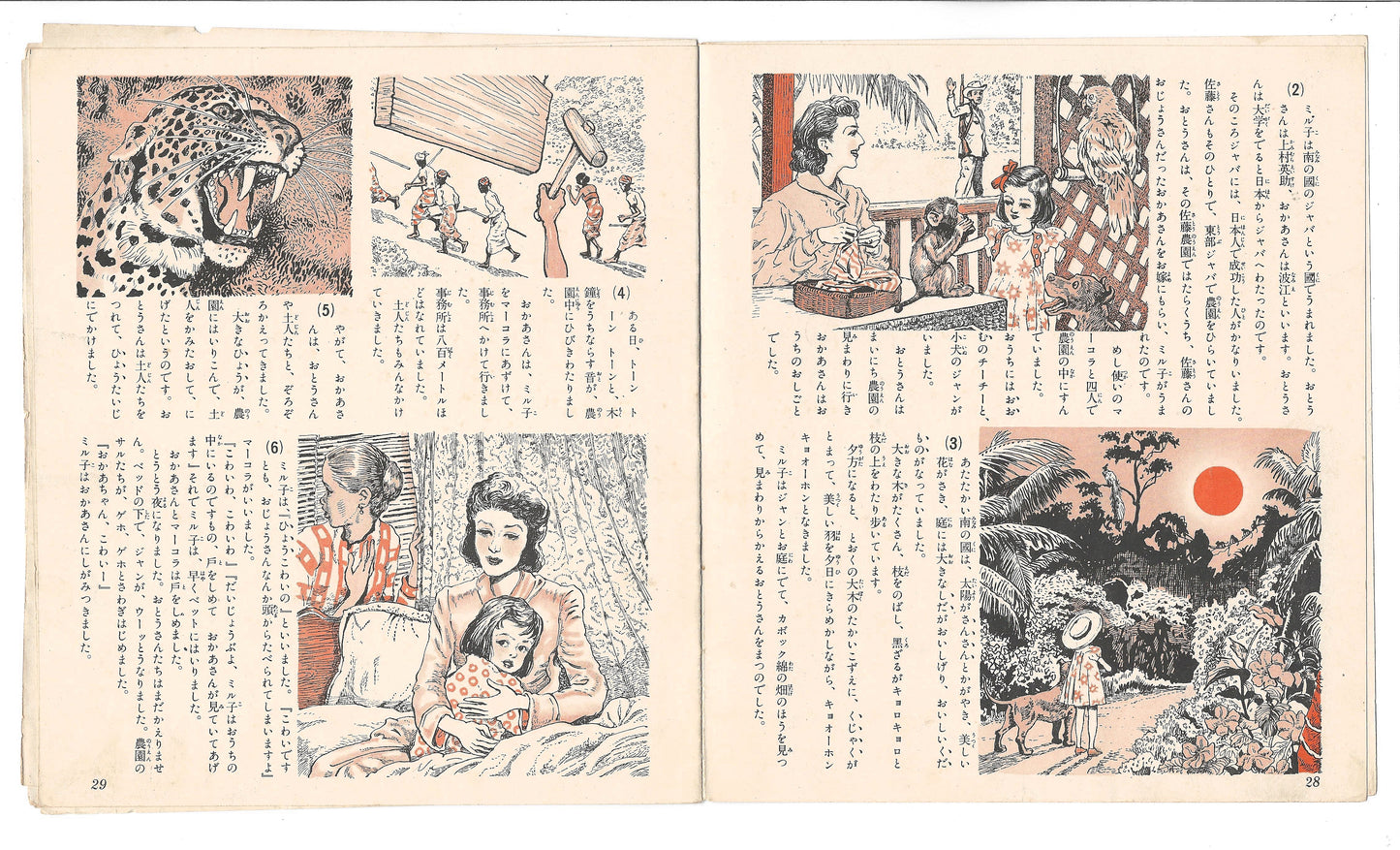
Yamakawa’s versatility was evident in his wide range of western and boy-hero narratives. The Adventures of Pecos Bill (Peikosu Biru no Bōken) reflected his interest in the American frontier, while Zoku Shōnen Ace and Shin Shōnen Ace showed his attempt to evolve the boy-hero archetype in changing formats. Other works, such as Little Miruko (Chiisana Miruko) and The Adventures of Paul Bunyan, illustrated his ability to engage a Shojo public and to blend imported Western folklore with Japanese storytelling.
Artistically, Yamakawa stood apart from the rounded, Disney-influenced "cartoony" style of Osamu Tezuka. While Tezuka moved toward a fluid comic idiom, Yamakawa remained committed to realistic anatomy, detailed environments, and strong chiaroscuro (dramatic light and dark contrasts). His pages felt like illustrated adventure books told frame by frame.
By 1954, Yamakawa was the highest-earning artist in Japan. However, the late 1950s saw a sharp decline in emonogatari as panel-based manga became the new standard. He attempted a revival with the magazine Wild in 1967, but financial failure forced him to sell his home and effectively ended his mainstream career. For a time, he even ran a restaurant called "Dolphin" in Yokohama to make ends meet.
In the early 1980s, publisher Haruki Kadokawa revived interest in Yamakawa’s work, publishing high-quality reprints. This led to a new serialization in Shōsetsu-ō, his first new work in 15 years, and a 1984 animated film of Shōnen Kenya, in which Yamakawa himself appeared in live-action segments.
Historically, Yamakawa remains a foundational figure. He carried the visual language of kamishibai into the modern era, establishing the commercial success of long-form adventure stories. His work is key to understanding the diverse, realistic paths that Japanese visual storytelling took before the total dominance of modern manga.
Share