

Saso Yoshikuni
Biography | Sasō Yoshikuni (Tokyo, 1914–2003)
Biography | Sasō Yoshikuni (Tokyo, 1914–2003)
Couldn't load pickup availability
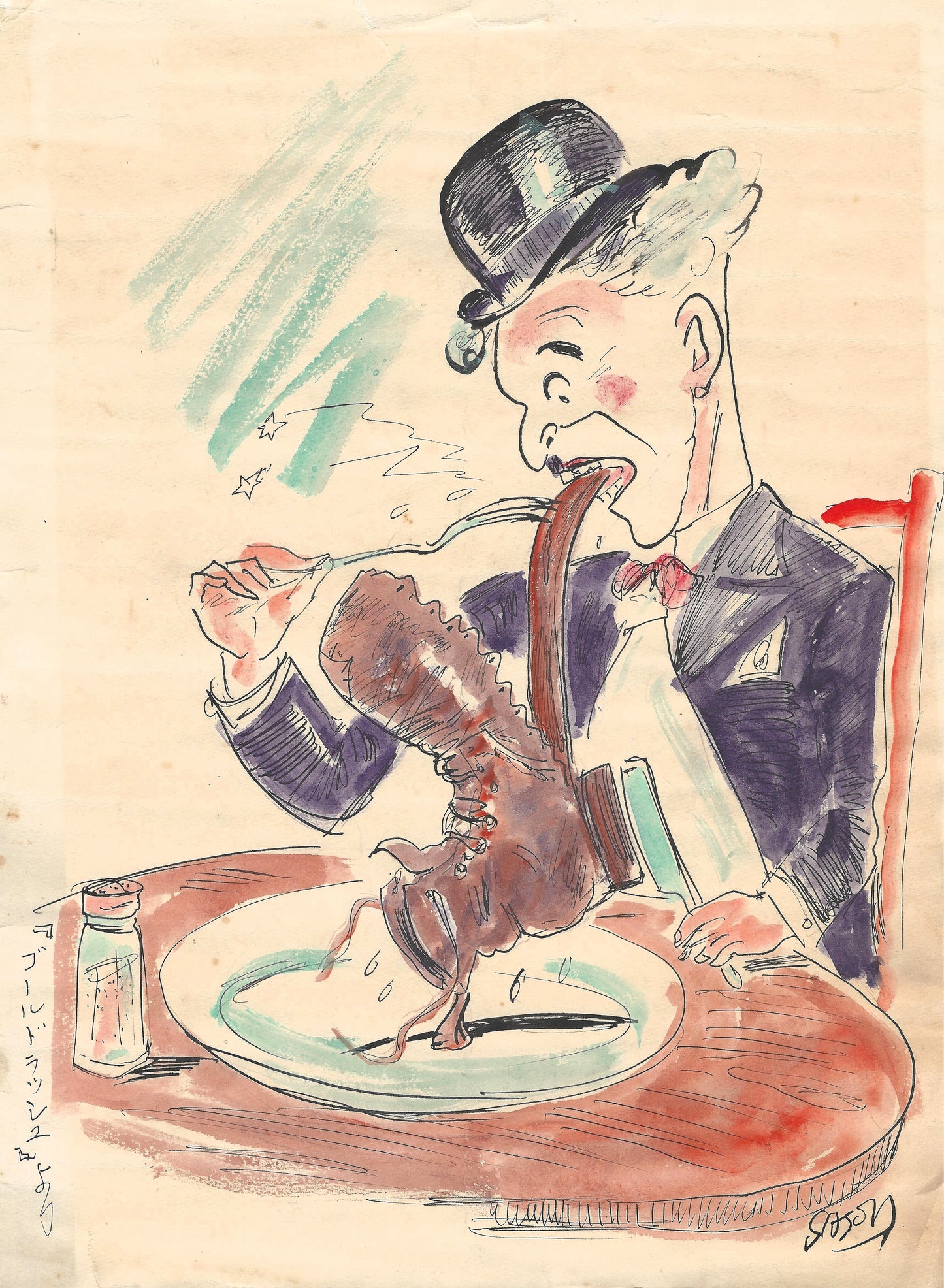
Saso Yoshikuni (1914-2003) was a Japanese manga artist and painter who trained under Wakahiko Yamamoto and Tsuguharu Fujita, establishing a foundation in academic painting that formed his later work in manga, illustration, cartoons, and painting.
In 1932, he became a founding member of the Shin Manga-ha Shūdan, a collective of artists including Ryūichi Yokoyama, Yukio Sugiura, Kon Shimizu and Hidezō Kondō, which sought to develop new approaches to manga expression in the early Shōwa period. The group functioned as a collaborative platform, allowing its members to publish more easily and to experiment with new ideas, an approach that was considered innovative at the time.
Before the war, Saso contributed to both manga and illustration, including publications such as Shōtenchi. He worked on “Shūkan Chiyoda,” where he collaborated with Santaro Kawakami on illustrated pieces depicting the many changes in Japan and in Tokyo, his home city.
Publications such as “Kanda wa omoide no machi aruki.” placed him among the artists involved in the development of modern manga and satirical illustration.
During the war, the Japanese government controlled what artists could publish. Many artists and groups had to support the war effort or adapt their work to official expectations, and independent or experimental expression became difficult. Like many artists of his generation, including Ryūichi Yokoyama, Saso continued working under these conditions, producing, among other things, war-related imagery. After the war, these systems disappeared, and artists had to adjust again: some continued, some changed direction, and new forms of manga began to develop.
Sasō contributed to satirical publications such as VAN, a magazine founded in 1946 that brought together leading cartoonists and illustrators. Through caricature and illustrated satire, it addressed political, economic, and social issues in the immediate postwar period, reflecting the renewed freedom of expression and the emergence of a more critical visual culture.
Saso sought to further develop his new style in the aftermath of the war, at a time when its wounds had not yet healed. His work, both in manga and in painting, remained socially engaged throughout his career.
Yoshikuni's career spans this transition, and his most important work reflects the changing conditions and life of prewar, wartime, and postwar Japan. His output includes a wide range of subjects and formats, notably children’s illustrations, war-related imagery, satirical drawings, and, later, religious painting.
In his final years, he focused primarily on Buddhist painting.
He was recognized as an honorary member of the Japan Manga Artists Association.
Share