

Marina Shirakawa
Biography | Marina Shirakawa (白川まり奈, 1940–2000)
Biography | Marina Shirakawa (白川まり奈, 1940–2000)
Couldn't load pickup availability
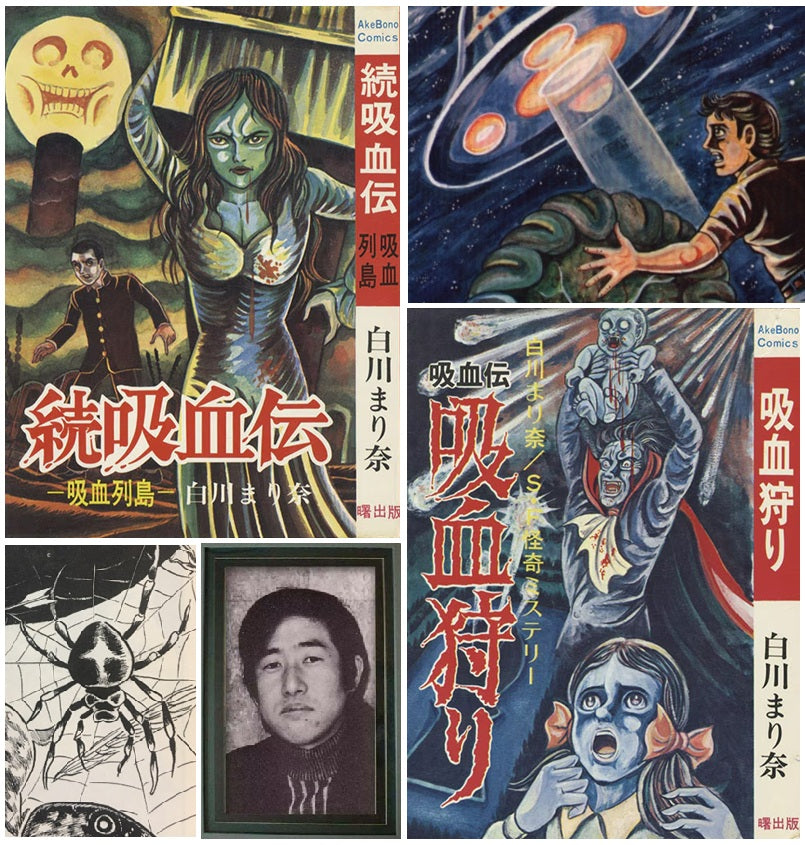
Marina Shirakawa (白川まり奈, 1940–2000) was one of the most enigmatic artists in postwar Japanese horror manga, a mangaka whose work fused grotesque fantasy, occultism, science fiction, and yōkai folklore into a nightmarish imaginative universe.
Despite the feminine sound of the name “Marina,” a typically European female name, Shirakawa was male … a detail that only added to the aura of mystery surrounding the artist and his work.
Shirakawa studied at Musashino Art University but left before graduation to begin a career as both an illustrator and manga artist. Although he would later become known primarily for horror manga, his interests extended far beyond manga itself. Throughout his life, he studied folklore, the supernatural, UFOs, speculative science, and the occult. These interests strongly shaped both the color and structure of his work.
Emerging during the late postwar era of cheap horror paperbacks and rental-book culture, Shirakawa developed a style unlike that of most mainstream manga artists of his generation. His pages were filled with eerie darkness, distorted anatomy, decaying flesh, invasive organisms, and uncanny landscapes that seemed to exist somewhere between nightmare and folklore.
Rather than relying on simple shock or straightforward ghost stories, he constructed narratives overflowing with inherited curses, ancient grudges, forgotten legends, and hidden forces buried beneath modern society.
In his manga, the past rarely remained dead. Ancient incidents resurfaced generations later, ancestral sins infected descendants, and ordinary people stumbled into places burdened by centuries of supernatural residue.
What distinguished Shirakawa from many other horror mangaka of the period was the depth of research underlying his fiction. Collectors and admirers repeatedly noted the extent to which his stories drew upon old documents, folk legends, historical anecdotes, and his own investigations into occult subjects. His manga frequently incorporated references to regional myths, yōkai traditions, supernatural beliefs, and speculative theories gathered from a wide range of sources.
Even when some of these theories drifted into eccentric or questionable territory, they contributed to the strange intensity that made his work so memorable.
This fascination with yōkai and hidden worlds became one of the defining aspects of Shirakawa’s career. He became deeply absorbed in the study of yōkai and the occult, eventually earning a reputation not only as a horror mangaka but also as an occult researcher, sci-fi enthusiast, and even a UFO researcher.
These interests formed the foundation of his work. His monsters and supernatural entities were rarely random creations. Instead, they emerged from a worldview in which folklore, paranormal belief, cosmic terror, and the lingering past coexisted naturally.
Among collectors, works such as The Vampire Legend series, Yōreitō, and Onihime Orochi are admired for the richness of their folklore references and their intense atmosphere of death. These works mostly follow characters drawn unwillingly into supernatural disasters tied to ancient events, cursed bloodlines, or locations haunted by violent histories. Shirakawa approached these narratives not as random horror stories but as carefully structured worlds supported by layers of occult logic and mythological detail.
UFO invasions, giant creatures, vampires, fungal contamination, and cosmic catastrophes could all coexist within the same bizarre fictional world.
His famous UFO Mushroom Invasion became emblematic of this sensibility, combining apocalyptic science fiction with grotesque biological horror in a way that felt simultaneously absurd and deeply disturbing.
For many years Shirakawa remained more a whispered legend among horror manga collectors than a widely recognized figure. His books were notoriously difficult to obtain, circulating primarily among specialized collectors and occult manga enthusiasts. Long before prices exploded publicly, rare titles already traded privately for high sums among devoted fans.
Interest in his work expanded dramatically after the revival and reprinting of UFO Mushroom Invasion, which introduced a broader audience to the bizarre originality of his vision. Readers who had never encountered Shirakawa before were suddenly confronted with manga unlike anything else: grotesque, paranoid, strangely intellectual, and completely unconcerned with conventional genre boundaries.
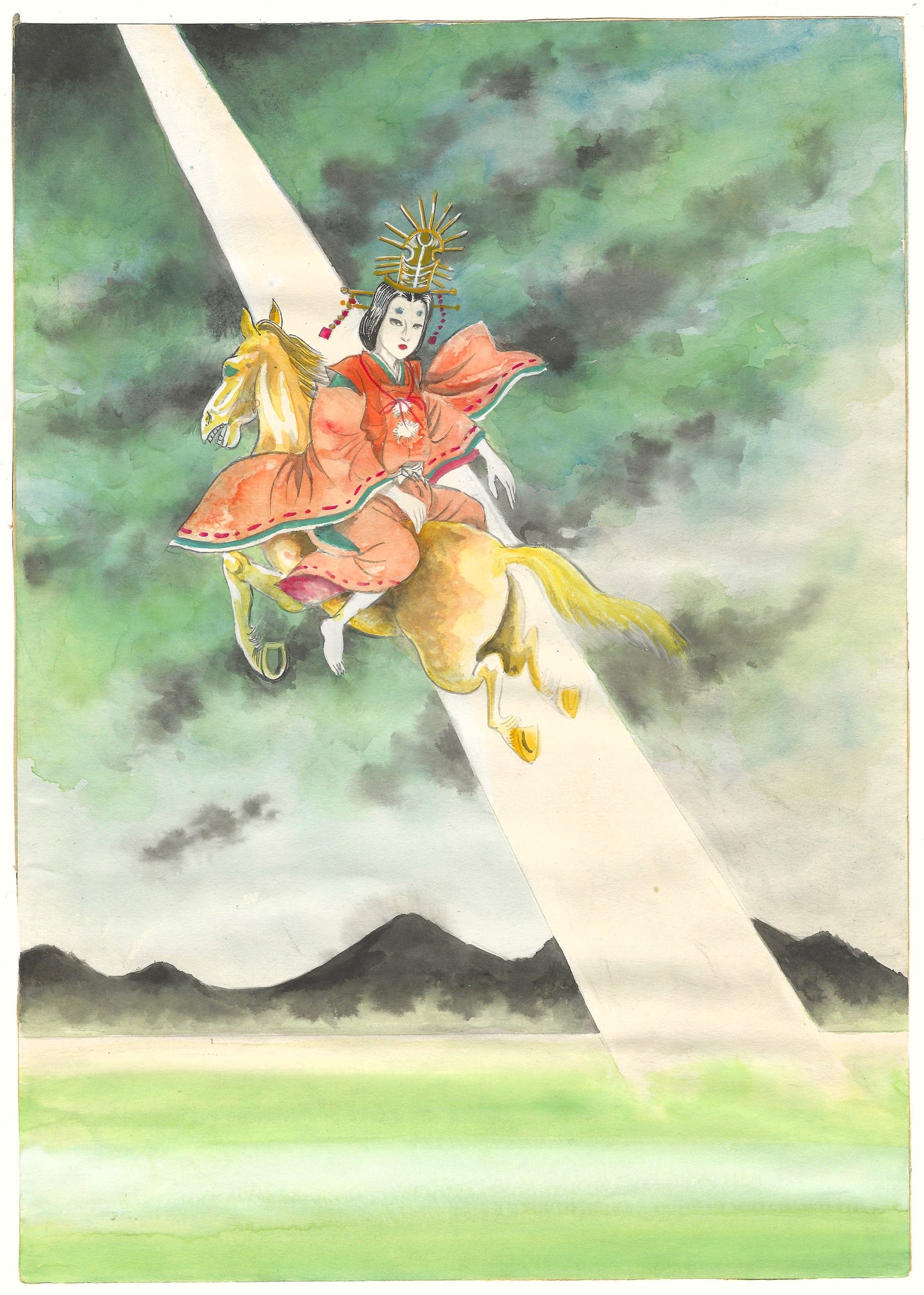
The rediscovery of Shirakawa’s work also revealed how deeply yōkai imagery and supernatural folklore permeated his artistic vision. One of the most significant posthumous discoveries was the unpublished manuscript eventually released as Shirakawa Marina Yōkai Emonogatari.
Described as a project he pursued as a life’s work, the manuscript demonstrated the depth of his commitment to yōkai culture and supernatural imagery. The work was originally left unpublished during his lifetime and later rediscovered years after his death, reinforcing the sense that much of Shirakawa’s creative world remained hidden or scattered after he disappeared from public view.
The unpublished yōkai material further confirms how central folklore and supernatural imagery were to his work.
Even admirers close to the world of vintage horror manga often remarked upon how little was truly known about Shirakawa’s private life, his artistic development, or the origins of his distinctive style. Questions linger about what he had pursued before becoming a published manga artist and how he developed such an unusual visual language so early in his career. Much of that mystery only deepened after his death in 2000, when many felt that a lifetime of occult knowledge, research, and unrealized ideas vanished with him.
Today Marina Shirakawa is increasingly recognized as one of the singular voices of Japanese horror manga: an artist who transformed yōkai lore, occult research, and grotesque imagination into an oeuvre unlike anything produced by his contemporaries.
His manga stands at a strange crossroads between folklore, pulp horror, cosmic nightmare, and postwar underground culture, preserving a vision of horror rooted not only in fear, but in obsession, curiosity, and the lingering presence of forgotten worlds.
Share